Realizing Human Rights in Public Housing
![]()
In 1976, the Department of Housing and Urban Development’s (HUD) budget was just over $86 billion. In the past three decades, however, this figure fell to approximately $34 billion, while the gap between the number of low-income renters and the amount of affordable housing units skyrocketed from a nonexistent gap to a shortage of 4.4 million affordable housing units. In the six short years between 1999 and 2006, annual funding for public housing specifically declined by 25%. To date, under the mis-named federal Housing Opportunities for People Everywhere program (H.O.P.E. VI) over 100,000 public housing units have been demolished. Since the program does not require one-for-one replacement, these units are not being replaced at nearly the same levels. In fact, studies suggest that less than 12% of those displaced from demolished units eventually move into the replacement housing.
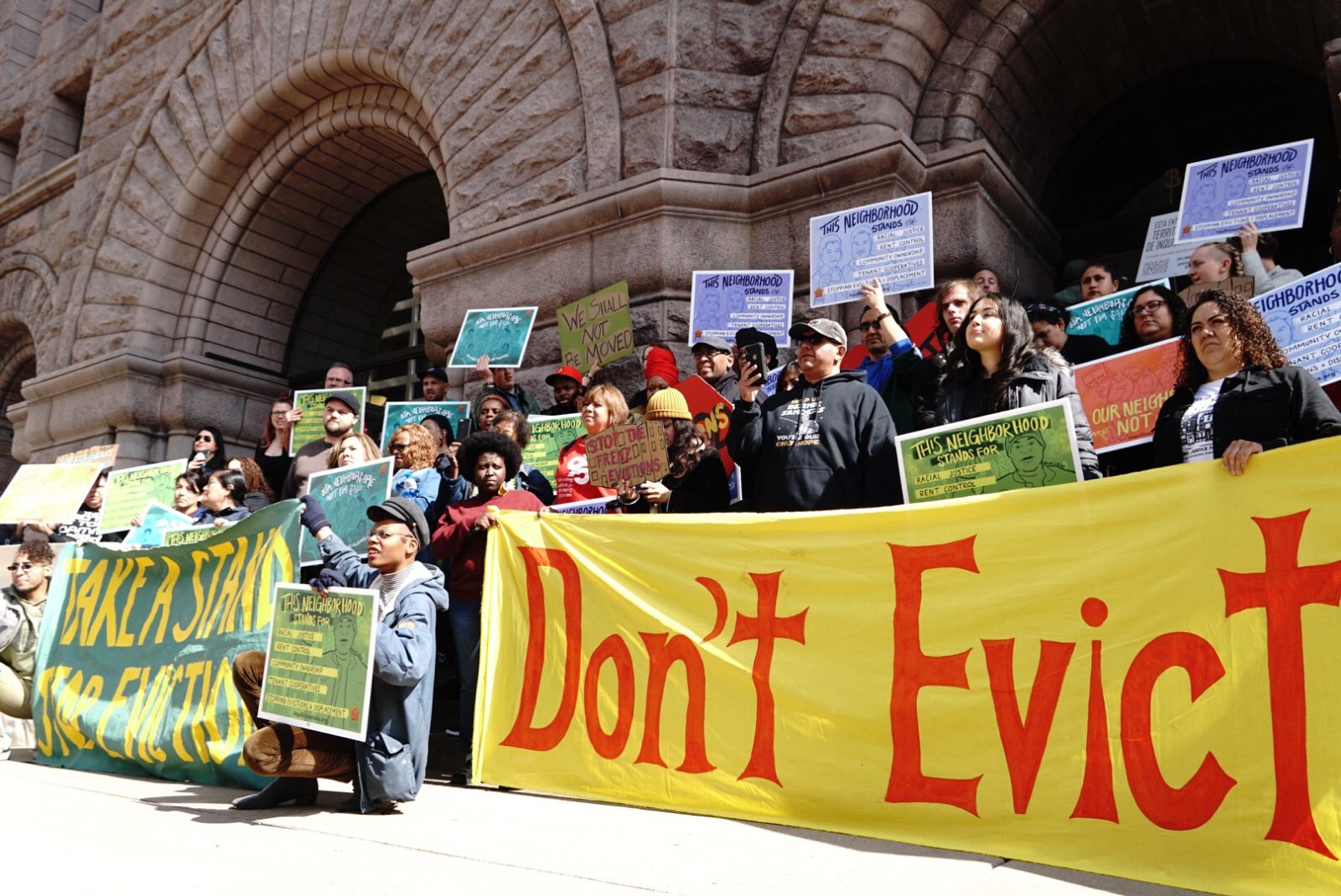
NESRI’s Public Housing Campaign assists public housing resident organizations in their anti-demolition and displacement campaigns, as well as provides advocacy support around compulsory community service, the right of residents to participate in decision-making, and other quality of life issues.
Work with the New Orleans Housing Rights Community
.jpg)
NESRI works with Mayday New Orleans and other local organizations to encourage equitable re-building practices for public housing residents in post-Hurricane Katrina New Orleans. Despite heroic efforts on the part of local organizers and their national and international supporters, the Big 4 public housing projects in New Orleans – C.J. Peete, B.W. Copper, St. Bernard and Lafitte – were demolished in the spring of 2008. The demolitions occurred notwithstanding a city-wide 43% increase in rent and a doubling of the homeless population in New Orleans since Hurricane Katrina. Additionally, there is growing concern that the city lacks the funding required to rebuild the demolished communities per the mixed income development plan they originally touted. To learn more about the history of the struggle to save public housing in post Katrina New Orleans, see No Shelter from the Storm.
-
facilitating a solidarity letter on the right to return for former public housing residents and the immediate halt to the then proposed demolition of over 4,800 units of public housing,
- submitting letters of concern to UN Special Rapporteurs on the Right to Adequate Housing and the Rights of Internally Displaced Persons,
- filing a submission with the UN Advisory Group on Forced Evictions to conduct a fact-finding mission to New Orleans, and
- attending press conferences and other public events in support of the public housing community in New Orleans.
NESRI and Mayday Develop a Housing Participatory Survey
.jpg)
In March 2009, NESRI traveled to New Orleans to assist Mayday New Orleans in a participatory survey of public housing residents. This survey was a response to a threat of eviction against a member of Mayday New Orleans for using language deemed abusive by the Housing Authority of New Orleans (HANO). This case surfaced the range of abusive regulations where residents could get evicted for minor offenses, including trivial issues like broken light fixtures.
NESRI’s Human Right to Housing Program, along with the Center for Constitutional Rights and the Poverty Initiative, traveled to New Orleans to provide training and partner in administering the survey which documented the extent to which these local housing policies violate the human rights of public housing, Section 8 and other voucher assistant residents. The survey, which has already served as a valuable public education and organizing tool, will be the basis for a human right to housing report on these issues and for developing legal strategies in response.
NESRI will continue to work with the New Orleans housing rights community to advocate for the right to return and participation for public housing residents. Additionally, we will also address the larger issue of development and city planning and advocate for a human rights–based approach to the redevelopment of New Orleans that is not only socially and environmentally sustainable but seeks active participation from residents as well.
For more information, read the Formal submission to UN Advisory Group on Forced Evictions.
Resources
- January 1, 2012
- November 21, 2011
- April 6, 2011
- March 18, 2011
- November 10, 2010
- November 2, 2010
- September 15, 2010
- August 31, 2010
- March 22, 2010
- March 1, 2010
Sign up for our e-newsletter


OUR SOCIAL NETWORKS